

Events

Data Science Seminar: AI models as building blocks for multimodal pathology analysis
AI is rapidly advancing the field of computational pathology, enabling new ways to extract quantitative and biologically meaningful information from digitized tissue images.
In this seminar, Dr. Andrew Song, assistant professor in the Department of Translational Molecular Pathology at The University of Texas MD Anderson Cancer Center and adjunct professor in the Department of Computer Science at Rice University will highlight the growing role of pathology foundation models that support scalable representation learning and more flexible analytical workflows.
While the majority focus is on histopathology, this discussion will explore how models across multiple modalities, such as spatial transcriptomics and proteomics are equally important. Together, these innovations are reshaping computational pathology, driving new insights into disease biology, and accelerating progress toward precision medicine.
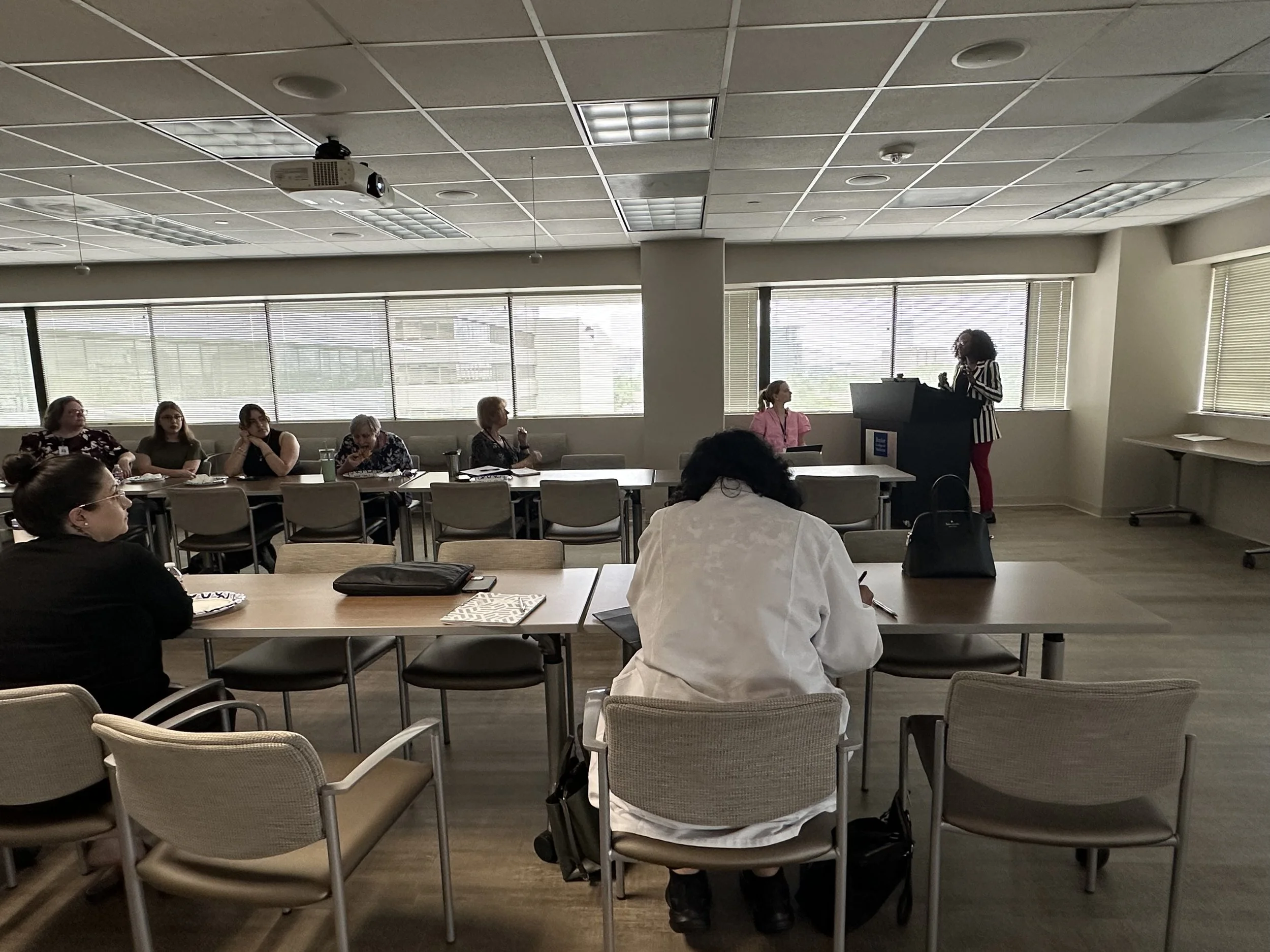
Other Academic Voices Series: Addressing Complex Health Challenges Through Systems Change: Lessons on Approaches to Cross-Sector Research and Evaluation
The Community and Stakeholder Engagement Program invites all physicians, nurses, physician assistants, other allied healthcare professionals, community partners, patient advocates and community members to attend the next Other Academic Voices session, “Addressing Complex Health Challenges Through Systems Change: Lessons on Approaches to Cross-Sector Research and Evaluation.”
During this session, participants will:
Describe how research and evaluation can support cross-sector efforts to address social determinants of health and improve population health
Discuss challenges, opportunities, and lessons learned from designing and conducting evaluation and research studies across sectors and settings
Identify strategies for incorporating community expertise and partnerships into the design and implementation of translational research
Speakers
This session will be led by Dr. Monique Gill, a research scientist at the Center for Outcomes Research and Education (CORE), and Dr. Keri Vartanian,
CORE’s director, who leads the development and implementation of the organization’s vision and strategy.
About Other Academic Voices
The Other Academic Voices series helps researchers and clinicians address complex community issues by introducing new ideas and perspectives developed by or with communities. This for-credit continuing medical education (CME) program emphasizes collaboration and community engagement in health research and care.
Note
AAFP has reviewed Other Academic Voices and deemed it acceptable for AAFP credit. The term of approval is from Sept.1, 2026 to Aug. 31, 2027. Physicians should claim only the credit commensurate with the extent of their participation in the activity. This session, “Addressing Complex Health Challenges Through Systems Change: Lessons on Approaches to Cross-Sector Research and Evaluation,” is approved for 1 hour online AAFP Prescribed credit.
Questions
For questions, please contact Joanna Rodriguez or CTPHCSE@bcm.edu.

REDCap Training Series: Development Mode
Ready to build your first REDCap project? Join the Resources and Services Program for this hands-on session introducing the fundamentals of REDCap project development and guides participants through the essential steps needed to create, structure, test and prepare a project for data collection.
Whether you are new to REDCap or looking to strengthen your understanding of project setup, this training will provide practical knowledge and foundational skills to support your research and data collection efforts.
Participants will learn:
Project creation and setup
Instrument design
Data dictionaries
Codebooks
Testing workflows
Best practices for preparing projects for data collection and data export
By the end of this session, participants will be able to:
Identify the key steps for setting up a REDCap project from start to finish.
Define the components of a REDCap data collection form.
Describe how the data dictionary and codebook document an instrument's structure.
Identify the steps required to test data collection and export data.
This session is ideal for researchers seeking a strong foundation in REDCap project development and the skills needed to confidently prepare projects for successful data collection and management.
For additional information, please contact the Resources and Services team.
Training and Workforce Development Presents the Conversation Café
The Consortium for Translational and Precision Health’s (CTPH) Training and Workforce Development Program invites investigators, research and support staff, trainees, and other members of the CTPH community to participate in an interactive Conversation Café on September 3 focused on advancing translational science.
This engaging, in-person event will bring together participants for facilitated small-group discussions designed to explore the opportunities and challenges facing translational science. Through round-table conversations, attendees will share experiences, exchange perspectives, identify areas for improvement, and discuss ways to strengthen collaboration across disciplines and institutions.
The Conversation Café is intended to foster meaningful dialogue and help build stronger connections among members of the CTPH community while supporting the continued growth of translational science initiatives.
Lunch will be provided for this in-person event. Space is limited to 30 attendees, and early participation is encouraged.
For additional information, please contact Tiona Matthews.

Data Science Seminar: Rank-based fusion learning of biological age from multiple epigenetic clocks
Are you interested in learning more about biological aging?
Join Dr. Huxia (Judy) Wang, professor and chair of the Department of Statistics, William Marsh Rice Trustee Professor in Data Science, and member of the Ken Kennedy Institute at Rice University, for a presentation on a novel approach to estimating biological age.
Biological age aims to measure a person's aging status more accurately than chronological age, yet different epigenetic clocks often produce varying age estimates for the same individual. Dr. Wang will discuss a rank-based framework that combines multiple epigenetic clocks to create a more reliable measure of biological aging. This approach uses comparisons with age-matched peers and advanced statistical methods to generate consensus aging estimates without relying on restrictive assumptions.
This presentation will highlight preliminary findings from simulation studies and DNA methylation age data from the ELEMENT study, as well as ongoing research exploring calibration, identifiability and weighting strategies for improving biological age estimation.

CTPH K12 Program Speaker Series
Join us for the CTPH K12 Program Speaker Series! This event will provide attendees with strategies and lessons learned from a successful early-career investigator to help current K12 scholars, mentors and supporters plan future career development award applications.
This event is designed for K12 scholars, mentors and individuals associated with or interested in the K12 program, as well as those involved in training and workforce development. It offers practical guidance and valuable insights for career advancement.
This series is sponsored by the Clinical and Translational Science Award (CTSA) K12 Program at Baylor College of Medicine and the University of Houston; the Consortium for Translational and Precision Health’s Training and Workforce Development Program; and the UH Population Health K-Writers Summer Series.
Please note: This in-person event requires registration and is limited to 20 attendees.
Speaker
Raymond Jones, Ph.D., is an assistant professor in the Division of Gerontology, Geriatrics, and Palliative Care at the University of Alabama at Birmingham’s Heersink School of Medicine. He also serves as associate director of the UAB Center for Exercise Medicine.
Jones is an exercise physiologist focused on developing interventions to address vascular and cognitive dysfunction in older adults living with HIV. A former UAB CFAR K12 scholar, his current NIH-funded K01 research examines the impact of high-intensity exercise on vascular and cognitive health in this population.
He is particularly interested in elevating community voices to develop feasible and acceptable interventions with and for older adults living with HIV. His work aims to improve relevance, effectiveness and sustainability, ultimately enhancing health outcomes and promoting greater participation in exercise among this population.
Questions
If you have any questions, please contact Tiona Matthews.

CTPH K12 Program Speaker Series
Join us for the CTPH K12 Program Speaker Series! This event will provide attendees with strategies and lessons learned from a successful early-career investigator to help current K12 scholars, mentors and supporters plan future career development award applications.
This event is designed for K12 scholars, mentors and individuals associated with or interested in the K12 program, as well as those involved in training and workforce development. It offers practical guidance and valuable insights for career advancement.
This series is sponsored by the Clinical and Translational Science Award (CTSA) K12 Program at Baylor College of Medicine and the University of Houston; the Consortium for Translational and Precision Health’s Training and Workforce Development Program; and the UH Population Health K-Writers Summer Series.
Please note: This in-person event requires registration and is limited to 20 attendees.
Speaker
Elizabeth Heitman, Ph.D., is a professor in the Program in Ethics in Science and Medicine at the University of Texas Southwestern Medical Center in Dallas and a member of UT Southwestern’s Department of Psychiatry. Her work focuses on cultural aspects of ethics in biomedical science, clinical medicine and public health, particularly international standards of research ethics and education in the responsible conduct of research (RCR).
Dr. Heitman is a core faculty member in UT Southwestern’s Master of Science in Clinical Investigation (MSCI) program. She is a multiple principal investigator on two NIH Fogarty research ethics education grants—one in Mozambique and one in Peru—and has led ethics and RCR education for multiple NIH research training grants.
As co-chair of the Ethics Committee at UT Southwestern’s Clements University Hospital, she also serves on the universitywide Ethics in AI Working Group and the Health System AI Oversight Committee.
Dr. Heitman received her doctorate in religious studies and medical ethics from Rice University and has previously served on the faculty at UT Health Houston and Vanderbilt University Medical Center.
Questions
If you have any questions, please contact Tiona Matthews.
Data Science Seminar: Structured Modeling of Allelic-specific Gene Expression
What if subtle changes in gene expression could unlock answers to undiagnosed genetic diseases? This session will explore how allelic imbalance serves as a powerful signal for detecting gene regulatory defects. By using advanced statistical modeling and deep learning, the work improves the analysis of sequencing data and reporter assays to better identify inherited patterns of gene regulation. The findings also shed light on regulatory mechanisms and reveal how harmful mutations in noncoding DNA are selected against.
This session will be led by Bill Majoros, an assistant professor in the Department of Biostatistics & Bioinformatics at Duke University. He holds a bachelor’s degree in computer science from Penn State and a doctorate in computational biology from Duke University. Majoros has more than 30 years of experience as an applied researcher with work spanning defense electronic, natural language processing and genomics. In the early 2000s, he contributed to the initial sequencing and annotation of the human genome at Celera Genomics, which led to his 2007 monograph on algorithms for gene structure prediction published by Cambridge University Press. His laboratory at Duke focuses on developing computational methods to better understand genetic mechanisms in gene regulation.
AI Chatbots as Research Assistants: How to Enhance Your Productivity Day Three
Following the successful AI Chatbots course in 2025, this updated workshop will explore new uses of AI tools to enhance productivity, such as writing assistance, literature searches and data analysis for researchers and scholars.
This workshop is facilitated by Blaz Zupan, Ph.D., professor of AI and machine learning at the University of Ljubljana, Slovenia, and a visiting faculty member in the Huffington Department of Education, Innovation & Technology.
In this three-day workshop, researchers and scholars will gain:
An introduction to how large language models process text and predict responses, including model biases and response generation mechanisms impact reliability and consistency
Practical approaches to using AI tools to enhance efficiency routine tasks
Techniques for structuring prompts to obtain accurate and relevant outputs
How to use guided Q&A, reverse-role exercises and structured brainstorming to enhance productivity, creativity and problem-solving
This event is presented by the Consortium for Translational and Precision Health’s Training and Workforce Development Program and Baylor College of Medicine’s Master Teacher Fellowship Program.
Register to attend the workshop virtually via Microsoft Teams from June 15 through June 17, from 9 a.m. to 11 a.m. CT daily.
For questions, please contact Tiona Matthews.
AI Chatbots as Research Assistants: How to Enhance Your Productivity Day Two
Following the successful AI Chatbots course in 2025, this updated workshop will explore new uses of AI tools to enhance productivity, such as writing assistance, literature searches and data analysis for researchers and scholars.
This workshop is facilitated by Blaz Zupan, Ph.D., professor of AI and machine learning at the University of Ljubljana, Slovenia, and a visiting faculty member in the Huffington Department of Education, Innovation & Technology.
In this three-day workshop, researchers and scholars will gain:
An introduction to how large language models process text and predict responses, including model biases and response generation mechanisms impact reliability and consistency
Practical approaches to using AI tools to enhance efficiency routine tasks
Techniques for structuring prompts to obtain accurate and relevant outputs
How to use guided Q&A, reverse-role exercises and structured brainstorming to enhance productivity, creativity and problem-solving
This event is presented by the Consortium for Translational and Precision Health’s Training and Workforce Development Program and Baylor College of Medicine’s Master Teacher Fellowship Program.
Register to attend the workshop virtually via Microsoft Teams from June 15 through June 17, from 9 a.m. to 11 a.m. CT daily.
For questions, please contact Tiona Matthews.
AI Chatbots as Research Assistants: How to Enhance Your Productivity Day One
Following the successful AI Chatbots course in 2025, this updated workshop will explore new uses of AI tools to enhance productivity, such as writing assistance, literature searches and data analysis for researchers and scholars.
This workshop is facilitated by Blaz Zupan, Ph.D., professor of AI and machine learning at the University of Ljubljana, Slovenia, and a visiting faculty member in the Huffington Department of Education, Innovation & Technology.
In this three-day workshop, researchers and scholars will gain:
An introduction to how large language models process text and predict responses, including model biases and response generation mechanisms impact reliability and consistency
Practical approaches to using AI tools to enhance efficiency routine tasks
Techniques for structuring prompts to obtain accurate and relevant outputs
How to use guided Q&A, reverse-role exercises and structured brainstorming to enhance productivity, creativity and problem-solving
This event is presented by the Consortium for Translational and Precision Health’s Training and Workforce Development Program and Baylor College of Medicine’s Master Teacher Fellowship Program.
Register to attend the workshop virtually via Microsoft Teams from June 15 through June 17, from 9 a.m. to 11 a.m. CT daily.
For questions, please contact Tiona Matthews.

Understanding by Design Workshop: Design Sprints for Curriculum Development
Learn how to develop courses and workshops that align outcomes and competencies with assessment and active learning approaches.
Facilitated by Nancy Moreno, PhD, and Alana Newell, PhD, of the Huffington Department of Education, Innovation & Technology at Baylor College of Medicine.
In this workshop, participants will benefit from:
Skills and templates to develop measurable learner outcomes and align assessment and teaching with outcomes
Hands-on experience applying sprint methods for individuals and teams to develop curricula and courses
How to design active learning approaches to improve learner engagement and skills development
This workshop is presented by the CTPH Training and Workforce Development Program and Baylor College of Medicine’s Master Teacher Fellowship Program.
Register to attend the workshop in person at One Baylor Plaza, Suite N104, or virtually via Microsoft Teams.
Lunch will be provided for in-person attendees and is limited to the first 30 registrants.
If you have any questions, please contact Tiona Matthews.

Data Science Seminar: Functional and Immunotherapy Insights from Cancer Proteogenomics
Hosted by Dr. Bing Zhang, this Data Science Seminar will explore how cancer proteomics integrates with genomics, epigenomics and transcriptomics to better understand how genetic mutations translate into functional changes in cancer.
Building on large-scale efforts through the National Cancer Institute’s Clinical Proteomic Tumor Analysis Consortium (CPTAC). Dr. Zhang’s work focuses on using deep learning to analyze post-translational modification patterns and developing computational pipelines to identify tumor-specific antigens for immunotherapy. This approach provides deeper insight into how proteogenomics can illuminate cancer biology and create new opportunities for precision oncology.
About The Speaker
Dr. Bing Zhang is a Cancer Prevention and Research Institute of Texas (CPRIT) Scholar, McNair Medical Institute Scholar and professor of molecular and human genetics at Baylor College of Medicine. He directs an internationally recognized research program in cancer protogenomics, integrating genomic and proteomic data to advance understanding of cancer biology and improve diagnosis and treatment. He has published more than 200 peer-reviewed papers, including over two dozen in Nature, Nature Methods, Cell and Cancer Cell. His contributions to computational proteomics were honored with the Gilbert S. Omenn Computational Proteomics Awards in 2023.

REDCap Training Series: Creating a Database Using REDCap
The Consortium for Translational and Precision Health’s Resources and Services Program is inviting researchers and research staff to learn how to create a database using REDCap, a widely used electronic data capture tool for clinical, academic and public health projects.
During this session, participants will build a database alongside instructors after a brief review of the initial webinar held last November, with step-by-step guidance through the process.
No prior experience with REDCap is required. However, participants must contact their institution’s REDCap support team in advance to create an account.
By the end of this session, attendees will develop practical skills in creating and managing a REDCap database.
For additional information, please contact Melissa Martinez.
CHWs Leading Community- Engaged Research Conference
The Consortium for Translational and Precision Health is excited to participate in the biannual Community Health Workers (CHWs) Leading Community-Engaged Research Conference hosted by the University of Houston’s Community Health Worker (CHW) Initiative.
This in‑person, one‑day conference will be held at 4455 University Dr., Houston, TX 77204, Student Center South, Houston Room, second floor.
This conference will highlight CHW‑led research, community‑engaged practices and collaborative approaches to advancing health in the community and offer a valuable forum for CHWs and CHW Instructors (CHW‑Is) to exchange knowledge, strengthen partnerships and explore innovative strategies that support community health outcomes.
Attendees may earn up to 7.0 continuing education units for CHWs and CHW-Is, pending approval.
For additional information, please contact Monique Joseph or cwi@central.uh.edu.

First R Studio Webinar
The First R Studio Webinar is designed to inform early‑career investigators about a service that supports those preparing to submit or resubmit their first R01 grant. During each session, selected presenters share their proposals with a multidisciplinary panel of reviewers curated by the studio committee.
Presenters receive targeted, expert feedback and engage in discussion to address key scientific, methodological or strategic challenges prior to submission. Written feedback is also provided following each session.
Investigators receive feedback to improve their grant submissions and increase their likelihood of receiving funding.
Investigators interested in participating in a First R Studio may apply during open application cycles.
For questions about this webinar, please contact the Resources & Services team.
Other Academic Voices session: Health is Our Nature: Why a Greener Houston is Critical for Patient and Community Resilience.
This session is designed to explore the many ways exposure to and interaction with nature influence human health including physical, mental and community-level outcomes while highlighting how the One Health framework can be put into practice to create nature-rich environments that support healthier individuals and communities. Participants will also learn about evidence-informed tools, digital applications and practical strategies clinicians can use to help patients safely and meaningfully engage with nature.
This session will be led by Jamie González, executive director for Ecological Resilience in the UH Energy, Division of Energy and Innovation.
The Fertitta College of Medicine is accredited by the Accreditation Council for Continuing Medical Education (ACCME) to provide continuing medical education for physicians. The Fertitta College of Medicine designates this live activity for a maximum of 1.00 AMA PRA Category 1 Credit(s). Physicians should claim only the credit commensurate with the extent of their participation in the activity.
For questions, please contact Joanna Rodriguez at CTPHCSE@bcm.edu.

CTPH Friday Forum
Are you interested in learning more about the emerging fields of translational science? Join our Friday Forum, a monthly gathering where members of the CTPH community come together to discuss cutting-edge articles, work-in-progress and major events shaping translational science and research.
Join us for an engaging session highlighting emerging research from our CTPH K12 scholars. The scholars will provide brief updates on their respective projects, and time will be reserved for constructive feedback from the CTPH Friday Forum participants.

Data Science Seminar: AI-Closed-Loop, Self-Driving Lab for Gene Delivery
Developing lipid nanoparticles for genetic medicines is often limited by the lack of historical data, reducing the effectiveness of traditional machine learning. LUMI-lab, an autonomous, self-driving laboratory powered by a 3D transformer-based molecular model, helps overcome this challenge by learning efficiently from small datasets.
Pretrained on more than 28 million molecules, the model works with automated robotics to run continuous active learning cycles that balance high-value predictions with uncertainty-driven exploration. Through ten iterations and more than 1,700 robotically synthetized lipids, the system identified a highly potent, unexpected structural motif — brominated lipid tails — without human bias.
This presentation will cover the system’s computational architecture, uncertainty-aware sampling strategies and how combining foundation models with closed-loop robotics accelerates molecular discovery.
The speaker for this seminar is Yue Xu, Ph.D., an instructor in the Yong Li Lab in the Section of Epidemiology and Population Sciences in the Department of Medicine at Baylor College of Medicine.
Understanding By Design Workshop
Are you and your team developing teaching resources, curricula or new courses? Do you want your learners to be truly engaged and achieve meaningful outcomes?
Join us for a dynamic, hands-on workshop where you'll explore Understanding by Design (UbD) — a proven framework that helps educators align learning outcomes, assessments and instructional strategies. Whether you're starting from scratch or refining existing materials, this session will equip you with practical tools to design with clarity, intention and impact.
Walk away with a solid foundation in backward design and a clear path to creating learning experiences that resonate.
This workshop is sponsored by the Training and Workforce Development Program. Speakers include Nancy Moreno, Ph.D., the Thomas R. Powers Distinguished Chair in Educational Outreach and professor and department chair of the Huffington Department of Education, Innovation and Technology; and Alana Newell, Ph. D., an assistant professor in the Huffington Department of Education, Innovation and Technology, and the assistant director of the Center for Educational Outreach at Baylor College of Medicine.
CTPH Friday Forum
Are you interested in learning more about the emerging field of translational science? Join our Friday Forum, a monthly gathering where members of the CTPH community come together to discuss cutting-edge articles, work-in-progress and major events shaping translational science and research.
This month’s session will focus on research and translational science. We will review two papers that examine variations in terminology and how developing consensus around key concepts and terms can strengthen communications. The links to the papers are included in the event calendar invitation.
Other Academic Voices: Engaging at the Speed of Trust: Connecting Communities for Research
In partnership with the Tilman J. Fertitta Family College of Medicine and led by LaShaune P. Johnson Ph.D., this session will help participants learn to distinguish between community-engaged research (CER), community- based participatory research (CBPR) and other research approaches. Participants will identify the differences among CBPR, service learning and volunteering; discuss the importance of evaluating community voice and defining community-informed knowledge; and assess opportunities to incorporate community engagement across research design, implementation, analysis and dissemination.
For questions, please contact Joanna Rodriguez at CTPHCSE@bcm.edu.
Note: All participants must record attendance in the CME tracker, per the Tilman J. Fertitta Family College of Medicine policy. Physicians receive CME credit, while others receive attendance credit. Please set up your CME tracker profile in advance; credit is issued after you complete the evaluation using the activity code provided at the end.

Data Science Seminar: Applying Artificial Intelligence (AI) in Drug Discovery
Are you interested in how AI is transforming drug design? Join Dr. Wang as he explores how advances in AI-driven protein folding are accelerating rational drug design and overcoming long-standing limitations in structural biology.
He will also address the challenge of modeling the “GluePlex” - the ternary complex formed by and E3 ligase, a molecular glue and neo-substrate. These advances now allow researchers to predict protein interactions, design molecular glues more efficiently and identify new degraders without relying on traditional structures.
CTS Pilot Awards RFA Informational Webinar
Join the CTS Pilot Co-Leads, Dr. Bettina Beech and Dr. Sandesh Nagamani for an introduction to the upcoming 2026 CTS Pilot Program Request for Applications (RFA). This session will include an overview of CTS Pilot program goals, eligibility, key dates, and application requirements. There will be an opportunity to ask questions and explore how the program supports innovative, high-impact translational research across the Baylor College of Medicine and University of Houston partnership.

Revolutionizing Cancer Treatment with Digital Twins
Discover how digital twins are transforming cancer care. Using patient-specific data, these virtual models predict treatment responses and adapt in real time as new information-such as imaging and blood tests- comes in, resulting in highly personalized treatment.

Data Science Seminar: From Single Mutations to Population-Scale Network Rewiring: AI/Machine Learning Frameworks for Predicting Molecular Perturbations
Are you interested in how genetic variants reshape biology and disease? Join us to explore two powerful computational tools: eSIG-Net and SCORPION. Learn how these approaches uncover network-level changes tied to disease progression and advance precision medicine.
This Data Science Seminar features Dr. S. Stephen Yi, an associate professor and director of bioinformatics at Baylor College of Medicine, where he leads a research program at the intersection of computational genomics, network science, and precision medicine.

Other Academic Voices- Patient and Clinical Team Perspectives on Social Needs Screening and the Role of Community Partners
Don’t miss this opportunity to join Dr. Andrea Nederveld for a session on social needs screening. Discover the latest evidence on patient acceptance, uncover real-world challenges clinical teams face and learn proven strategies for partnering with community organizations to connect individuals with resources. Application for CME credit has been filed with the American Academy of Family Physicians. Determination of credit is pending.

Friday Forum
Are you interested in learning more about the emerging field of translational science? Join our Friday Forum, a monthly gathering where members of the CTPH community come together to discuss cutting-edge research articles, work in progress, and major events shaping translational science and research.

Data Science Seminar: From Clinical Feasibility to Bedside Use: Navigating Academic-Industry Challenges in Developing and LLM Chatbox for Parent Education
Parents often struggle with complex medical language when making decisions for their children. LitMed is a HIPPA compliant chatbot that uses secure authentication and EHR data to provide clear, personalized answers.
Join us to learn how LitMed moved from concept to bedside and where it’s headed next.
This Data Science Seminar features Ryan Brandon Hunter, MD, FAAP, a pediatric ICU attending at Texas Children’s Hospital and assistant professor of pediatrics at Baylor College of Medicine. He also serves as associate director of the Southwest National Pediatric Device Innovation Consortium (SWPDC).

REDCap Training: Introduction to REDCap
This introductory session will provide an overview of REDCap as a secure, versatile research data management platform. Participants will learn about REDCap’s history, key features, and the types of projects it supports. The session will highlight why researchers and institutions rely on REDCap for data collection and management, outline existing training opportunities, and walk through the steps for gaining access. Attendees will also help identify topics of interest for future REDCap trainings.

From Concept to Collaboration: How CTPH Supports Your Research
Join the Consortium for Translational and Precision Health (CTPH) — the new CTSA hub serving Baylor College of Medicine and the University of Houston — for an introductory webinar on the comprehensive services available to faculty and investigators via the CTPH Resources & Services Program.
Whether you're launching a new study or seeking expert input for your ongoing research, CTPH offers a wide range of no-cost support services to help you move forward efficiently and successfully.
In this session, you’ll learn how to access:
Study design and protocol development consultation
Biostatistics and epidemiology support
IRB preparation and regulatory navigation
PK/PD (pharmacokinetics/pharmacodynamics) consultation
Bioethics guidance for sensitive or complex studies
Community engagement and recruitment strategies
Pilot project development and funding connections
Cross-institutional collaboration facilitation
Workforce development, mentoring, and training resources
Our team will also walk through how to request support and answer any questions about how we can best collaborate with your department or research team.
Fourth Friday Forum
Monthly gathering for members of the CTPH community to discuss research articles, work-in-progress, and major events shaping translational science and research.