
Dr. Chorong Park, assistant professor and Presidential Frontier Faculty (Health + AI in Robotics Design) at the University of Houston, is improving the lives of older adults through technology.
Her goal is to build digital resilience in aging and care by designing technologies and care environments that help older adults navigate technological change and difficulty while preserving their ability to make choices, remain connected, and obtain the support they need.
As health care and everyday services become increasingly digital, technology fluency can influence older adults’ ability to manage their health and access care. When systems are designed around younger users and fail to accommodate differences in cognition, vision, hearing or movement, older adults may find interactions frustrating or feel that their needs and abilities are overlooked. Repeated difficulties may lead some older adults to distance themselves from technology, including tools that could help them manage their health or access health care services.
Through her lab, ELARA (Empathetic Lifespan AI & Robotics for Aging), Park studies how social robots can help older adults build healthy habits, address loneliness and navigate technology with greater confidence. The lab develops autonomy-preserving embodied AI systems for older adults and people with chronic conditions.
From Volunteer Service to Research
Park's passion for supporting older adults began while she was a doctoral student at Purdue University. She spent more than 600 hours volunteering with older adults, helping them use phones, computers, Bluetooth devices and other technologies. She also volunteered as a Music & Memory therapist for individuals living with dementia.
Through weekly visits to homes and senior centers, Park witnessed firsthand the challenges older adults face and the meaningful impact personalized support can have.
"When I play the music and talk to them, they started to talk back to me with the memories they had attached to the music," said Park. "I could tell at that moment they were here with me. That was really meaningful to me."
Those experiences inspired her interest in creating tools and technologies that help older adults maintain their independence and quality of life.
How the CTPH’s Community Responsive Studio Helped Advance the Project
Although Park had a vision for her research, building the community partnerships needed to launch the project presented a challenge after she relocated to Houston.
As a new faculty member unfamiliar with the area's aging-services network, she needed guidance on identifying research sites and establishing relationships with organizations that serve older adults. The Consortium for Translational and Precision Health's (CTPH) Community Responsive Studio (CRS) helped bridge that gap by connecting Park with community leaders, resources and organizations serving older adults throughout the Houston area.
One of the most significant connections facilitated through the CRS was with Sandy Harris, who introduced Park to Elder Service Provider Network meetings and opportunities to engage directly with community organizations.
"The CRS team really helped me understand the local environment and connected me with resources and people who wanted to help," said Park. "Those connections made it possible to build partnerships and move the project forward."
Through those introductions, Park was able to present her research, develop relationships with community partners and identify a senior center where the research could be conducted.
Designing Technology With Older Adults in Mind
Park's lab is developing ELPHI, a social robot designed to encourage healthy behaviors among older adults in community settings. The robot promotes habits such as drinking water, exercising, socializing and participating in activities that support physical and mental well-being.
To develop the robot, Park's team uses both qualitative and quantitative research methods to better understand the needs and preferences of older adults.
"We gathered interview data," Park explained. "We grouped the responses and identified the areas where older adults needed the most help. We looked at the shape of the robot they preferred, the features they wanted and the common themes. Then we developed our own robot designs based on those findings."
By incorporating feedback directly from older adults, Park hopes to create technology that is accessible, practical and responsive to users' needs.
Looking Ahead
Through the support of community partners and the connections fostered by the CTPH’s Community Responsive Studio, Park is advancing research that has the potential to improve how older adults interact with technology and maintain healthy, independent lives.
"I'm hoping the impact will be encouraging older adults to become more familiar with recent technologies," said Park. "When they interact with different technologies, they are less afraid to use them."
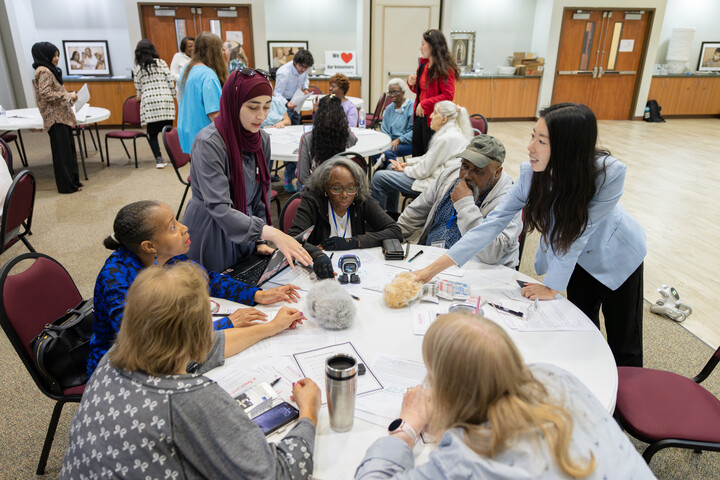
Photo courtesy of Dr. Chorong Park’s website.